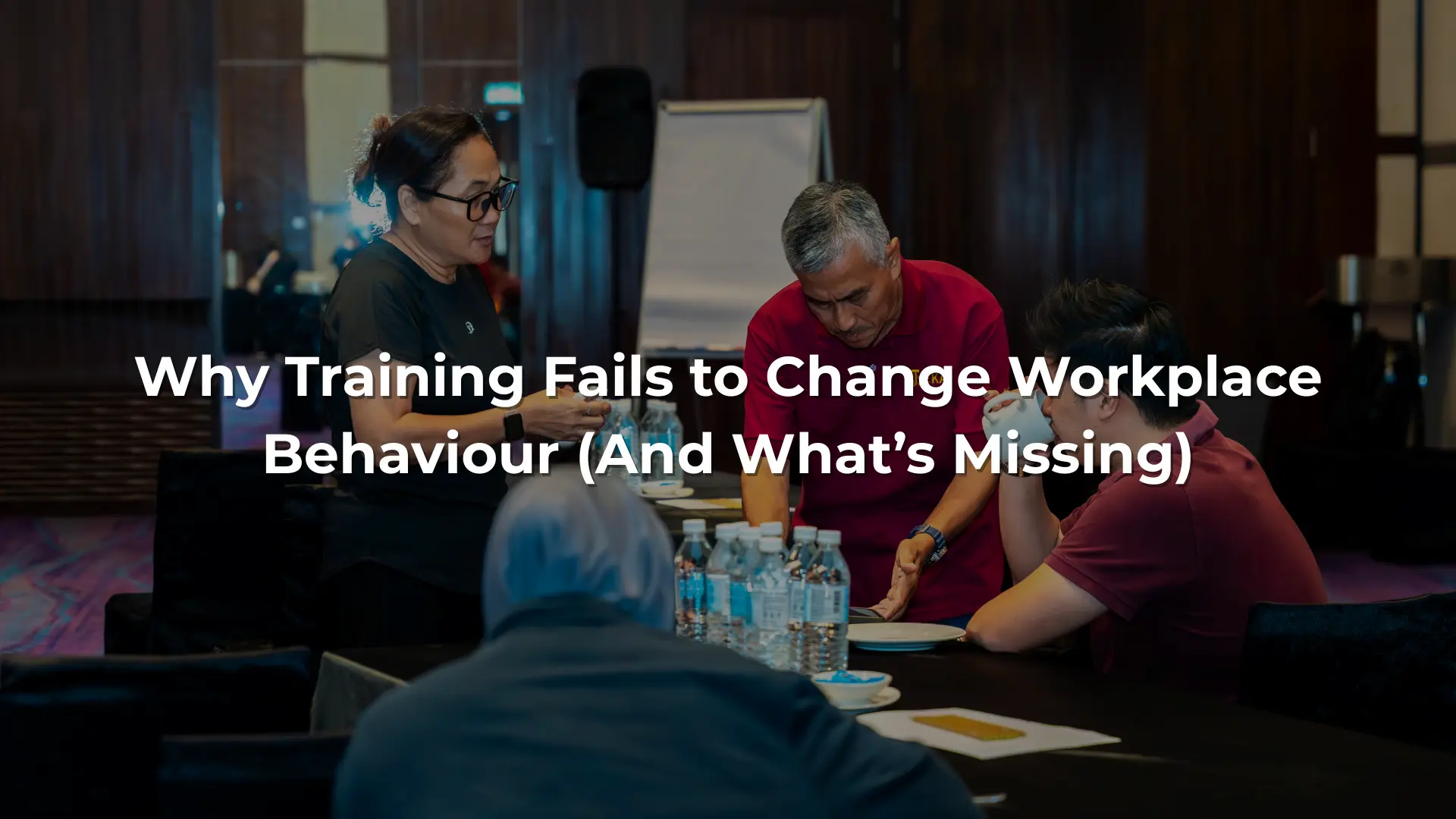
It is a common frustration for HR leaders: the training session was a hit, the speaker was engaging, and the feedback forms were perfect—yet, two weeks later, nothing has changed at the office. The "spark" of the workshop simply failed to become a habit in the workplace.
The reality is that behavior change doesn’t happen through exposure to information; it happens through a change in the environment and structure. To move the needle, training must be viewed as more than a one-off event. It must be a deliberate part of your corporate training.
Most training programs focus on "Knowledge Transfer," assuming that if an employee understands a concept, they will automatically apply it. However, the workplace is governed by existing habits and pressures that often override new learning.
To bridge this gap, we must focus on corporate training that actually changes workplace behaviour. This requires moving away from passive listening and toward active simulation. For a behavior to stick, employees need to "fail" and "re-try" in a safe environment before they are expected to perform at their desks. If the training doesn't force a participant to actually act differently during the session, it’s unlikely they will do so on Monday morning.

Individual behavior is heavily influenced by "the way we do things around here." If a person learns a new communication technique but returns to a department that rewards silence or hierarchy, the new skill will be suppressed.
This is the importance of embedding company culture through corporate training. Behavior change is most effective when it is a collective effort. When an entire team goes through the transformation together, they create a new set of social "norms." They begin to hold each other accountable, ensuring that the new culture becomes the standard, rather than the exception.
Understanding the "Why" behind training failure is the first step for HR to fix the ROI. Here are the common structural leaks:
Behavior change is a marathon, not a sprint. Your corporate training should provide the roadmap, but your daily office environment provides the road. When you treat training as a structural intervention rather than just a lecture, you begin to see the ROI you’ve been looking for.