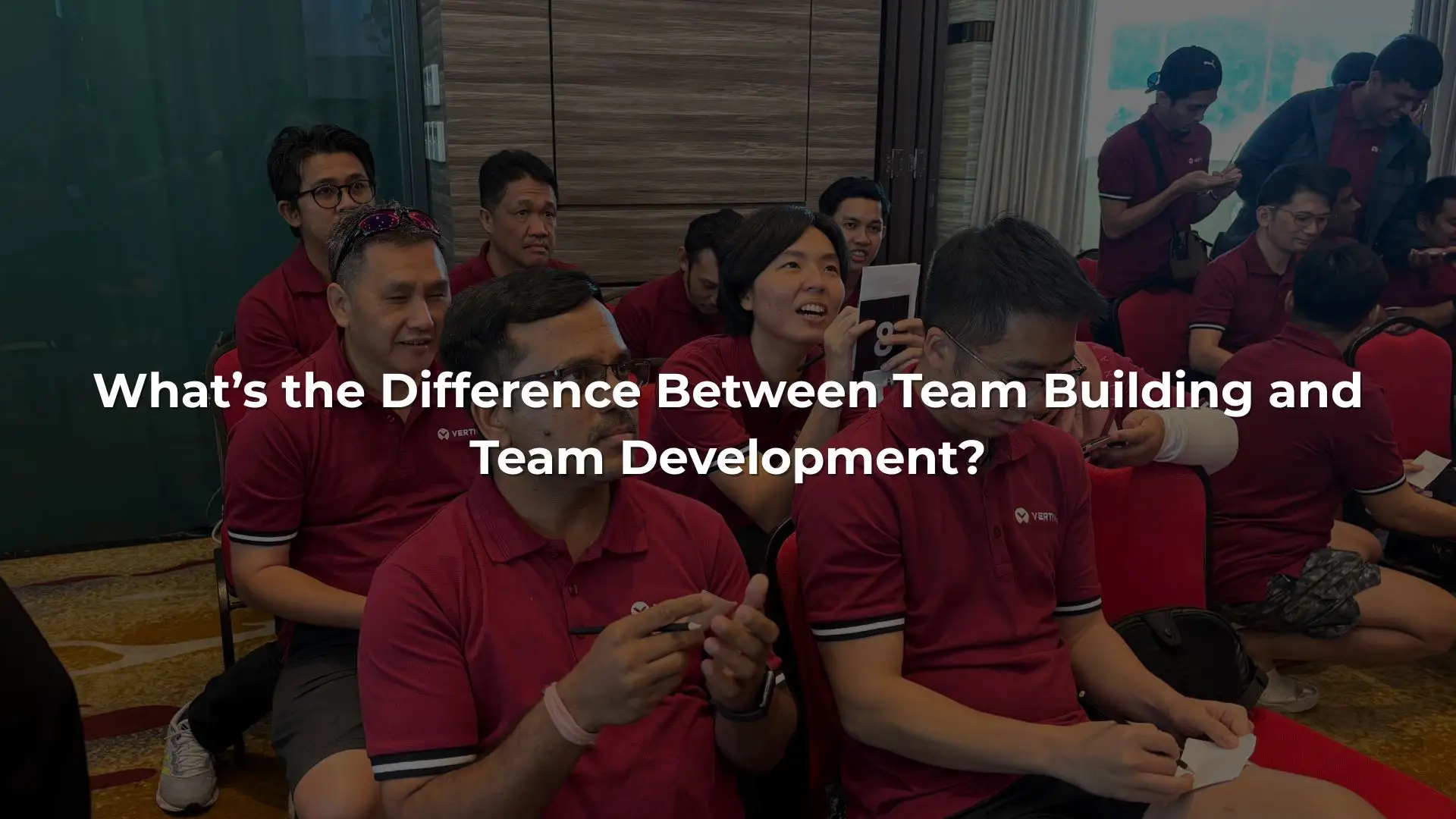
Many companies in Malaysia invest heavily in team building, hoping to improve morale and collaboration. Yet few realise that what they actually need is team development — a longer, deeper process that transforms behaviour and performance.
The two may look similar from the outside — both involve people learning to work together. But their goals, duration, and impact are fundamentally different.
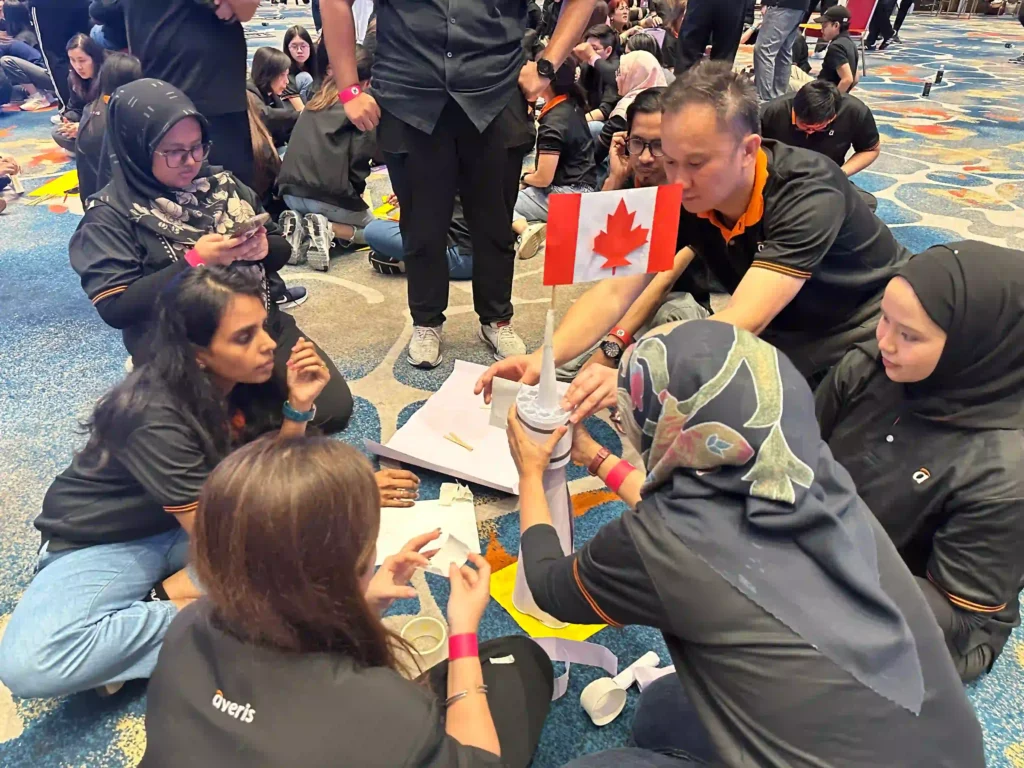
Short-term, experience-based activities that aim to strengthen trust, communication, and connection. It’s about how people feel working together — creating a sense of belonging and shared energy.
Common examples:
A structured, ongoing process focused on how people grow together. It blends reflection, feedback, and skill-based learning to improve performance, not just relationships.
This might include:
In short: Team building creates connection. Team development creates competence.
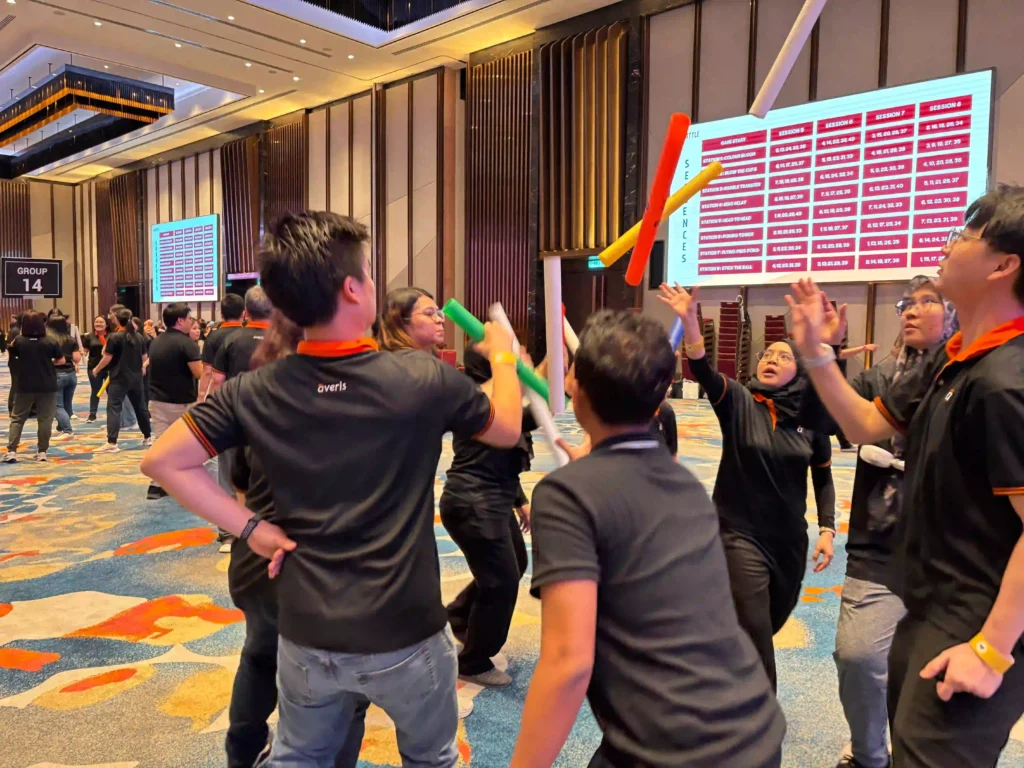
Team building happens in a moment — a single day or weekend. Team development unfolds over time — through consistent learning, reinforcement, and follow-up.
A team building event can open people up emotionally. But without structured development afterwards, the awareness fades.
Effective organisations combine both:
Learn how this two-step rhythm works in what makes an effective team building strategy in Malaysia . See practical examples in outdoor team building activities in Malaysia .
Aspect
Team Building
Team Development
Goal
Build trust & morale
Build capability & leadership
Focus
Shared experience
Continuous learning
Outcome
Connection
Competence
Timeline
Short-term
Long-term
Team building helps people feel like a team.
Team development helps them think and perform like one.
Both matter — the first opens the door, the second keeps it open.
You can learn how to measure these outcomes in how to tell if your team building plan is working and “How to Tell If Your Team Building Plan Is Working .
In Malaysia, HRD Corp (formerly HRDF) bridges the gap between experiential learning and structured training.
When team building programs align with HRD Corp-claimable modules, they evolve from activity to development pathway.
For instance:
This ensures that energy from the field turns into measurable skills back at work.
Learn more in what does HRDF-certified team training actually cover and is your team building HRDC claimable .
Team building works on emotion — trust, empathy, connection.
Team development works on habit — communication patterns, accountability, and mindset.
Emotions motivate, but habits sustain.That’s why the most successful teams treat both as partners, not opposites. When people first connect emotionally, they become more open to feedback and learning. When they continue developing skills, that trust turns into tangible results — better problem-solving, faster decisions, stronger ownership.
See how these effects appear over time in how effective is team building in Malaysia’s modern workplace .

Ask three questions:
If trust is missing — start with team building. If trust exists but progress stalls — move into team development. If both exist — sustain with culture programs and reflection cycles.
Learn practical evaluation methods in how to tell if your team building plan is working .
The difference between team building and team development isn’t a matter of choice —it’s a matter of sequence.
You build connection first, then build capability. That’s how short-term excitement turns into long-term transformation.
Continue exploring integration models in what makes an effective team building strategy in Malaysia or revisit the ultimate guide to team building in Malaysia 2025 .
Team building helps people trust each other.
Team development helps them trust the process.
One strengthens emotion; the other strengthens execution. When both work together, teams don’t just bond — they evolve. Because the real goal isn’t to have a great event; it’s to build a system that keeps people learning, performing, and growing together.