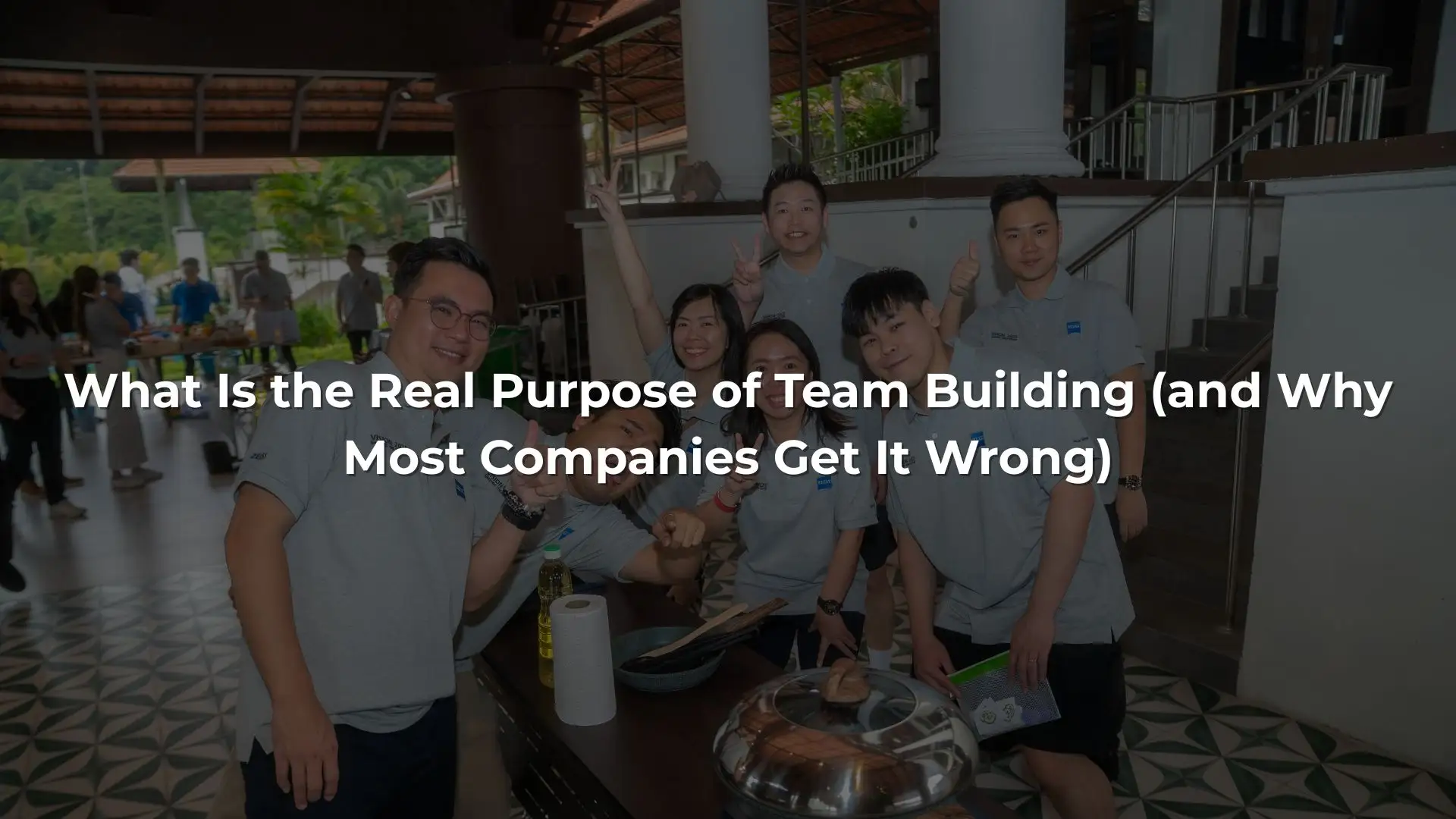
Across offices, factories, and creative agencies in Malaysia, team building has become a common ritual. There’s laughter, group photos, and a sense of refreshment — but weeks later, nothing really changes. Communication issues return, motivation dips, and the same people take charge while others stay quiet.
So if the goal of team building is to make teams stronger, why do so many teams feel exactly the same after it’s over? Because most companies treat team building as a day off, not a process of understanding. The real purpose isn’t just to have fun together, but to see what happens when people collaborate, decide, and adapt under new conditions. When designed with that in mind, team building stops being entertainment — it becomes a mirror.
Learn how this reflection turns into strategy in what makes an effective team building strategy in Malaysia .
The problem isn’t the activity — it’s the intention. Most teams jump straight into “doing,” without asking why we’re doing this. When the goal is “just bonding,” the outcome usually ends at smiles and photos. But when the goal is to see how we work together, every challenge becomes meaningful.
Imagine two teams building the same tower out of sticks and tape:
The real power of team building is in what it reveals, not what it produces.
We explore why activities alone can’t fix deep-rooted habits in why team building alone won’t fix workplace problems .
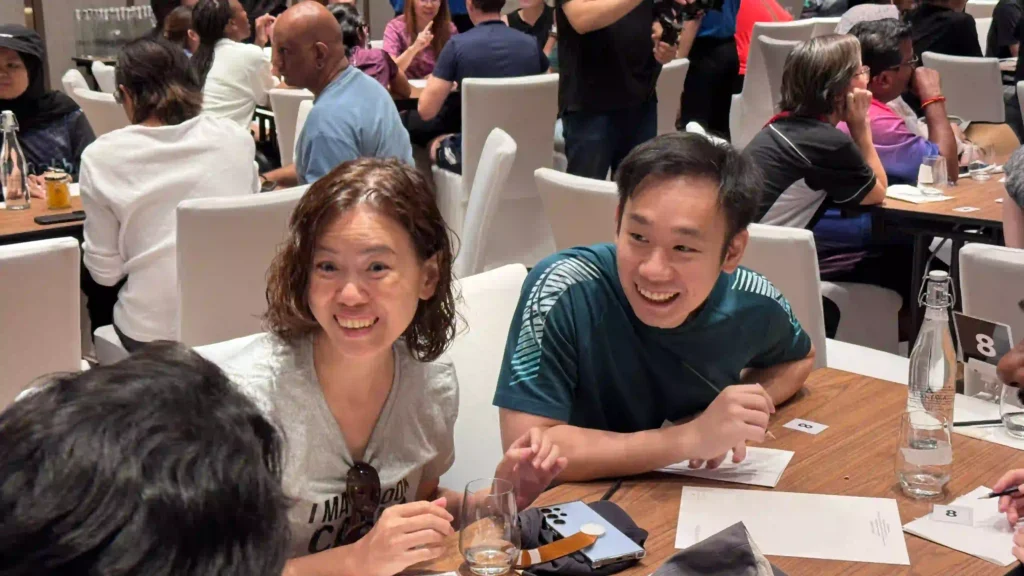
At its core, team building is a learning mechanism disguised as play.
It uses activity to surface patterns that usually stay invisible in day-to-day work.
When teams face a challenge — whether physical or mental — the event becomes a snapshot of how they actually function:
By observing these patterns, the team gains awareness — and awareness is the first step toward improvement.
But awareness alone isn’t enough. Without reflection, the insight fades just like the memory of the game. That’s why the most impactful team building includes guided conversations, where participants translate what they saw into what they’ll do differently back at work.
This reflection stage is the foundation of the G.R.O.W.T.H framework , which connects experience to measurable growth.
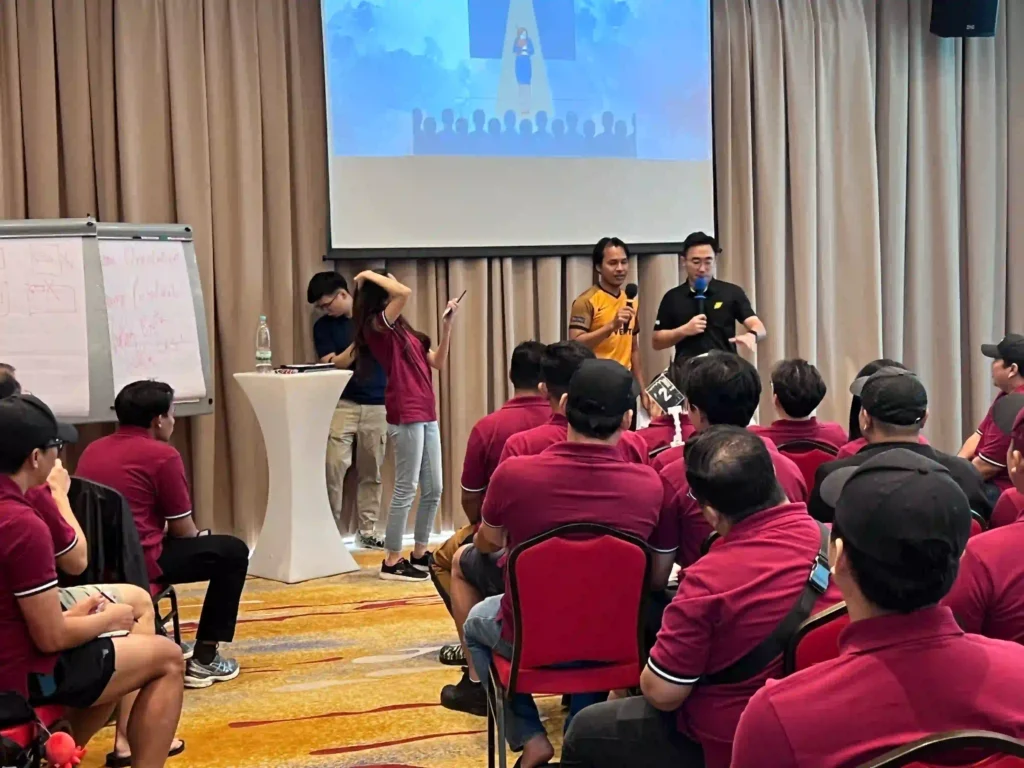
A good team building event feels fun. A great one feels slightly uncomfortable — because it challenges assumptions.
When teams go beyond playing together and start observing themselves, that’s when growth begins.
In practice, this means:
These small moments of evaluation train teams to pause and think, instead of reacting out of habit. That habit of reflection — not competition — is what carries back to the office.
To learn how to measure whether your sessions achieve this, check how to tell if your team building plan is working .
The most valuable part of team building isn’t the physical challenge — it’s the psychological reset.
When people step out of the hierarchy of the office, they experience each other as humans, not job titles.
That shift in perception unlocks what’s called psychological safety — a team’s ability to speak up, make mistakes, and ask for help without fear. Research shows that teams with higher psychological safety perform better, innovate faster, and handle stress more effectively.
True team building creates that environment, not by telling people to “trust each other,”
but by helping them experience trust under pressure.
This human element is often what separates a “fun event” from a transformative experience.
See how this shift continues into learning culture in how effective is team building in Malaysia’s modern workplace .
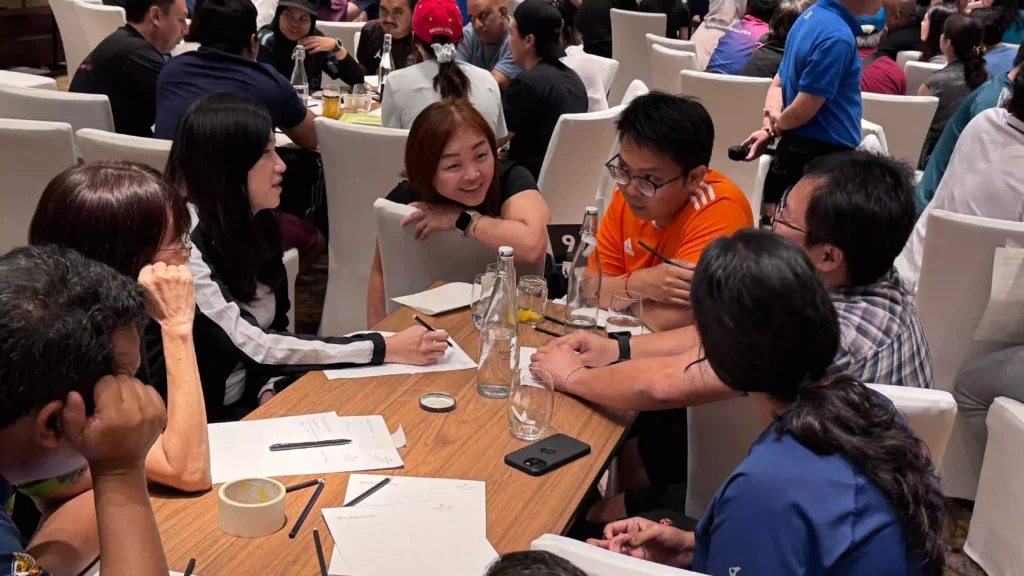
The real test of purpose comes after the event ends.
If the lessons stay on the field, nothing changes.
The goal is to carry reflection into routine — to turn awareness into practice.
That’s where structure comes in:
Some organisations even integrate HRD Corp–claimable training modules,so that the insights from team building are expanded through structured learning. You can learn more about these HRDF-supported programs in what does HRDF-certified team training actually cover and see if your next program can be HRDF claimable .

When a team truly understands why they are doing team building, the tone changes entirely. They stop waiting to be entertained and start engaging with curiosity. Leaders stop managing the process and start participating as equals.
And over time, something subtle happens: The team begins to reflect naturally — even outside of formal activities. They pause before reacting, question their assumptions, and adapt faster to new challenges.
That’s when you know team building has done its job —not because the activity was perfect, but because the team learned how to learn together.
Continue exploring how to sustain this change in what makes an effective team building strategy in Malaysia or discover inspiration from Malaysia’s top outdoor team building programs .
The real purpose of team building is not about doing something fun together —
it’s about seeing ourselves more clearly together.
When a team learns to observe its own patterns,
it gains something more valuable than motivation — it gains awareness.
And awareness, when guided and sustained, becomes growth.
Because ultimately,
a team that knows how to reflect will always know how to improve.