In the fast-paced Malaysian business landscape, "average" performance is no longer a safety net. For many HR leaders, the challenge isn't just about keeping the team busy; it’s about making sure that every individual’s effort translates into collective momentum.
When done right, development programs act as the connective tissue between individual talent and organizational success. By integrating these sessions into a broader corporate training in Malaysia, you stop treating performance as a lucky accident and start treating it as a deliberate outcome of your team building strategy.
Performance often stalls when there is a mismatch between what a team can do and what the company needs to do. Many organizations struggle because their training is outdated or disconnected from current market pressures.
To break this cycle, leadership must prioritize corporate training that drives team performance and strategy. This means moving beyond generic "soft skills" and focusing on the specific behaviors that unblock project delays. When a training program is designed to solve actual workplace friction—like slow decision-making or ineffective feedback loops—the impact on performance is immediate and measurable.
In Malaysia’s competitive talent market, high-performance teams are built on a foundation of "Growth Culture." Top performers don't just stay for the salary; they stay because they see a clear path to mastery.
Corporate training serves as a powerful retention tool. By investing in a structured learning journey, you are signaling to your employees that they are an asset worth developing. This investment builds a "Competency Moat" around your business, ensuring that your team is better equipped to handle a crisis than your competitors.
Knowledge alone doesn't change performance; application does. This is where the marriage between formal education and experiential learning becomes critical.
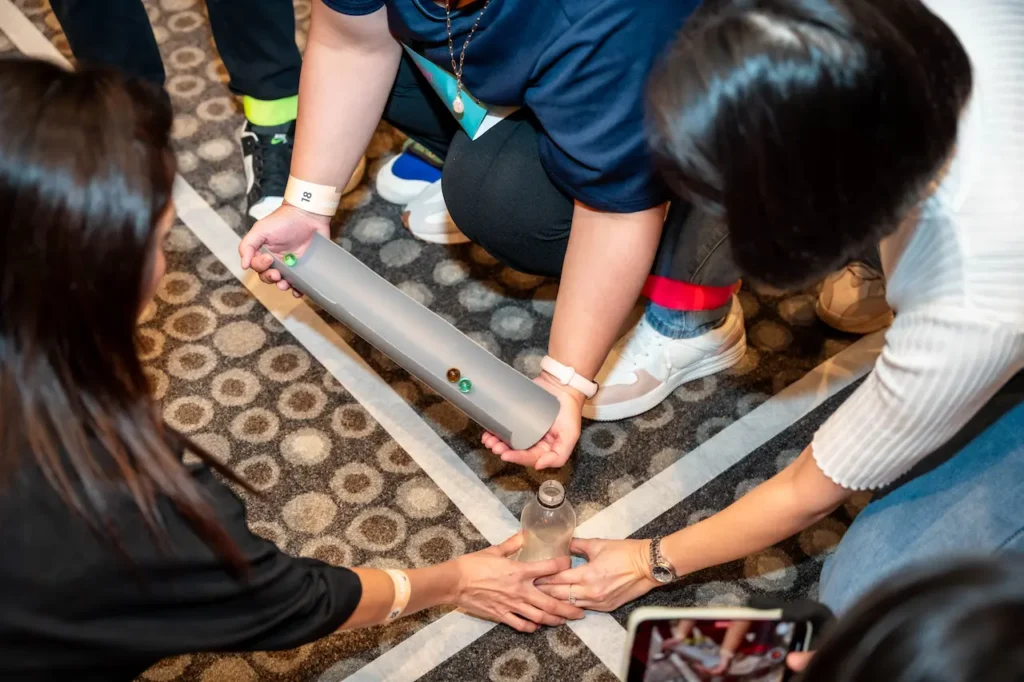
We often see a massive spike in ROI when companies understand how team building activities improve corporate training effectiveness. Training provides the "Theory," while team building provides the "Laboratory." By placing staff in a high-stakes simulation where they must use their new skills to succeed as a group, you turn a passive lecture into a permanent workplace habit.
If your team's output has plateaued, use this strategic checklist to identify and fix the underlying issues:
Observed Performance GapThe Strategic Intervention"The team is skilled but works in silos."Cross-Functional Design: Run a simulation where Team A’s success is 100% dependent on the quality of the data they receive from Team B."Communication is fast but full of errors."Precision Drills: Implement training activities that reward "accuracy over speed," forcing a shift toward more deliberate and clear communication habits."Staff are compliant but lack initiative."Ownership Workshops: Move away from "instruction-based" training. Use challenges where there is no clear leader, forcing junior staff to step up and make decisions.
Performance is a byproduct of clarity and trust. When your people know what to do (via training) and how to work together (via team building), you create a resilient culture that can withstand any market shift.
By treating your development roadmap as a core pillar of your corporate training in Malaysia, you ensure that your team is always evolving. Performance isn't a destination; it's a continuous journey of improvement.