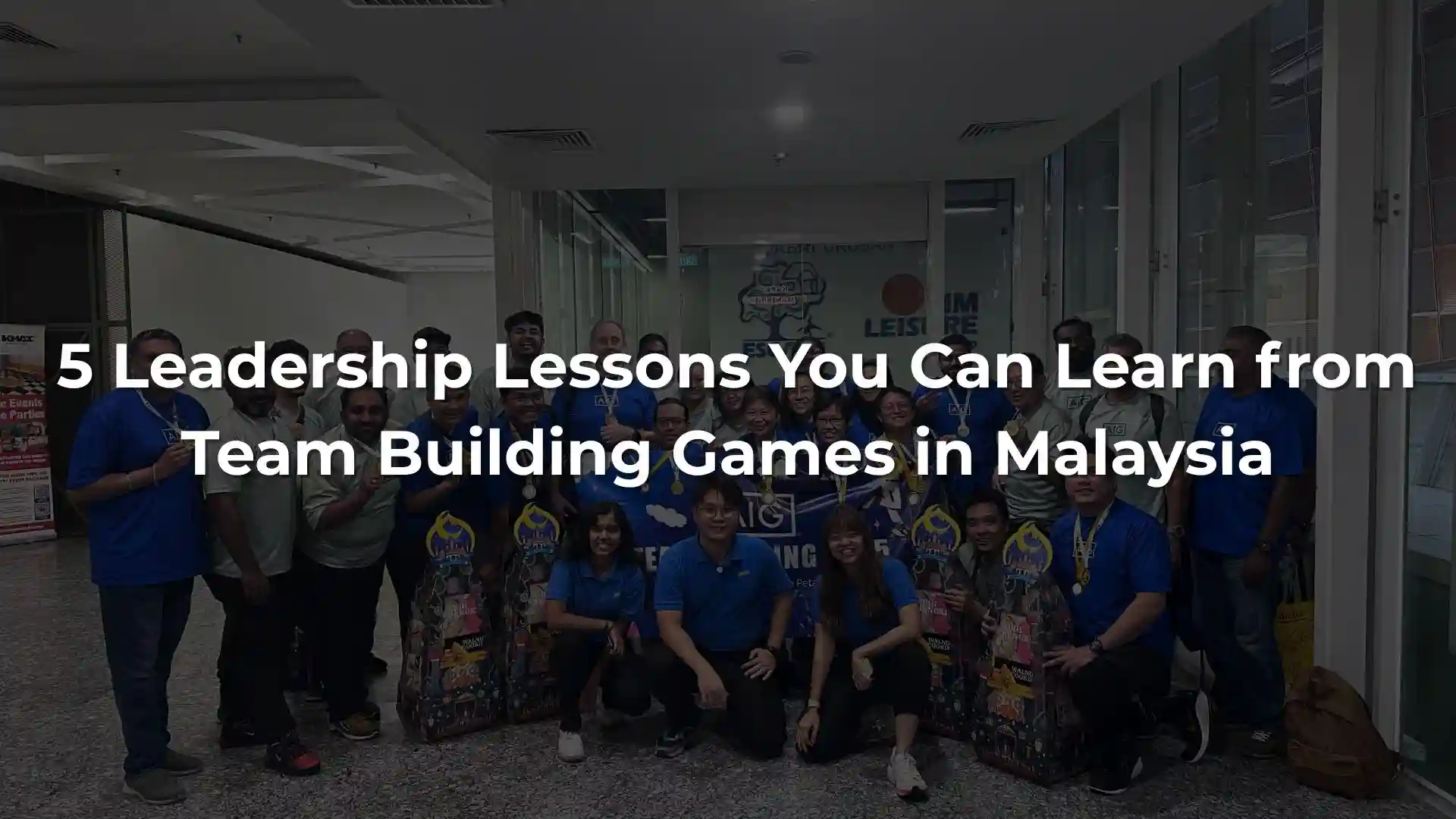
Leadership isn’t built in a classroom alone — it is tested in action, often in the small moments where people work together under pressure. Team building games, while seemingly lighthearted, are powerful mirrors of leadership behavior. They reveal how someone makes decisions, handles setbacks, and inspires others.
In Malaysia’s diverse workplace setting, these activities also carry extra weight. Teams often span different generations, languages, and cultural backgrounds, which means leadership is not just about authority but also about connection. Through play, leaders discover how they show up for others and where they can grow.
Here are five leadership lessons we consistently see emerge from team building games.
In a simple icebreaker like “Two Truths and a Lie,” strong leaders aren’t the ones who dominate the guessing, but the ones who listen carefully to subtle cues. The same applies in larger problem-solving games: leaders who pause to hear ideas from every member create solutions that the team actually owns.
In Malaysian teams, where some members may stay quiet out of respect or shyness, leaders who make space for all voices gain trust quickly.
Games like the Marshmallow Challenge often fail not because of bad ideas, but because instructions are unclear or misunderstood. Leaders learn that communicating vision simply and checking for understanding is more valuable than giving long speeches.
In multi-language teams, clarity often matters more than fluency. Leaders who adapt their style — using visuals, repeating key points, or inviting questions — stand out during activities.
In activities that require collaboration, participants look to someone to take initiative. Leaders earn trust not by declaring themselves in charge, but by showing consistency, responsibility, and respect.
In Malaysian workplaces, leaders who “serve before self” — helping arrange materials, guiding without ego — are the ones others naturally follow.
Outdoor games, like obstacle challenges or scavenger hunts, rarely go according to plan. Leaders quickly discover that adjusting strategy and encouraging resilience matters more than sticking to a rigid plan.
The same applies in the workplace, where unexpected changes — from market shifts to project delays — demand adaptability over perfection.
At the heart of leadership is empathy. In reflection rounds after games, the best leaders don’t just celebrate results; they notice who struggled, who felt left out, and who shone unexpectedly.
In collectivist cultures like Malaysia’s, leaders who show genuine care for their teammates strengthen loyalty and motivation far more than those who only push for performance.
Knowing the lessons is one thing — applying them is where the real value lies. Here are practical ways organizations in Malaysia can turn game insights into leadership growth:
Make it continuous, not one-off. Leadership growth takes repetition. Embedding these activities into company culture ensures lessons last.
Team building games may look playful, but the lessons they uncover are serious and lasting. They show us that leadership is not a title, but a way of listening, communicating, adapting, and caring for others.
For Malaysian organizations, these activities provide a safe space to practice leadership skills that translate directly back to the workplace. The next time your team gathers for a game, look closely — you might just see tomorrow’s leaders emerging.
👉 If you’re planning your next program, our [Ultimate Guide to Team Building in Malaysia] offers more strategies, activities, and insights to help you get started.