When companies set aside budget for people development, one common question always comes up: Should we run a team building program or invest in training?
For many HR professionals and business leaders in Malaysia, the two often look similar on the surface. Both involve gathering employees, taking them out of routine, and aiming to improve performance. But in reality, team building and training serve very different purposes — and choosing the wrong one can leave your people disengaged or your objectives unmet.
This article will unpack the differences between the two, show practical examples, and give you a clear guide to deciding which is right for your organization.
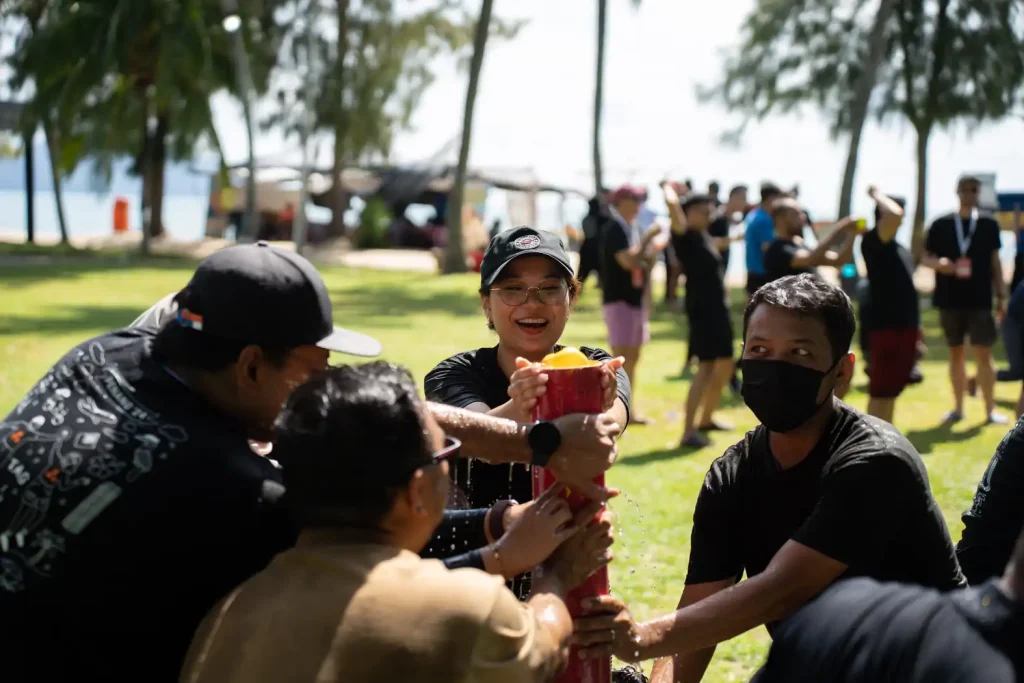
Team building is about relationships. It creates trust, breaks down silos, and builds energy across departments. The purpose is not to teach a technical skill, but to strengthen how people work together.
In short, team building works best when your challenge is:
💡 Example: A shared services hub in Kuala Lumpur brought staff from five countries together. Miscommunication slowed projects. HR organized a one-day team building retreat with icebreakers and group challenges. The outcome? People spoke up more, cultural barriers fell, and collaboration improved.
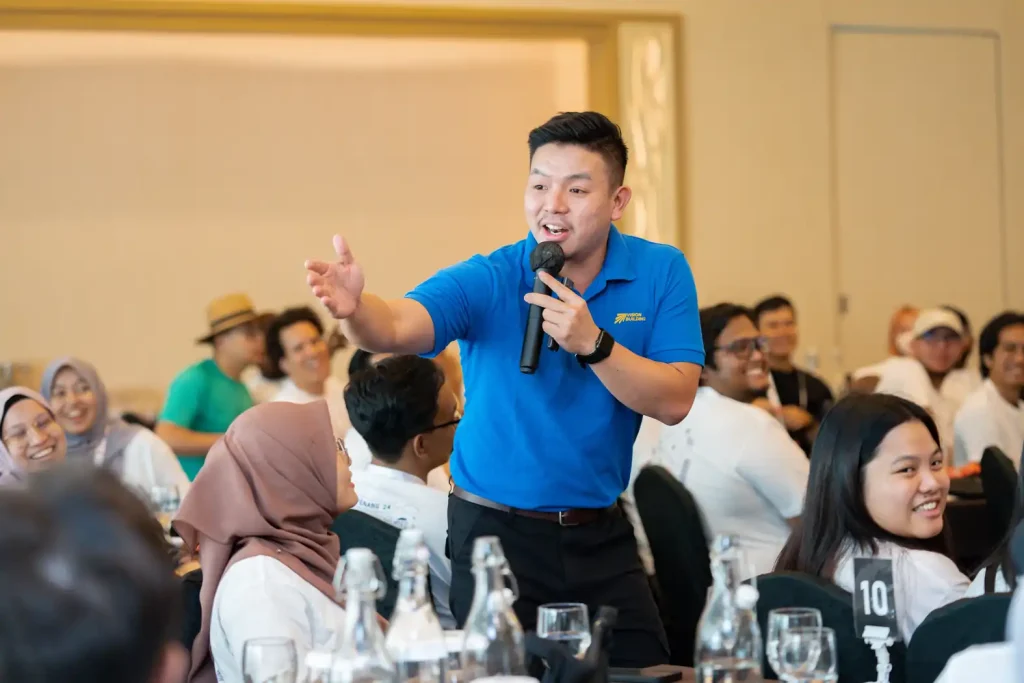
Training is focused on knowledge and ability. It is structured around what participants should be able to do differently after the program. Unlike team building, the emphasis is on content and application.
Training is the better choice when your problem is:
💡 Example: An SME wanted to expand into e-commerce. Nobody knew how to manage Shopee or Lazada. HR arranged a training program on store management. Within weeks, staff could upload products, run ads, and track sales — giving the business a new growth channel.
Although they look similar, the essence is different: team building improves relationships, training improves capability.
Aspect
Team Building
Training
Purpose
Trust, bonding, motivation
Skills, knowledge, performance
Format
Games, retreats, challenges
Workshops, lectures, modules
Outcome
Better teamwork and culture
Improved ability and results
Duration
Quick boost, short-term impact
Often requires continuity
Making the wrong choice doesn’t just waste budget — it can backfire.
That’s why it’s important to diagnose the real issue before committing to either option.
When in doubt, ask yourself one simple question:
This flow helps HR and leaders decide quickly without overthinking.
The most effective companies don’t see it as an either-or decision. They integrate both, often in sequence:
💡 Example: A financial services firm ran a half-day team building session in the morning, followed by compliance training in the afternoon. Because the group was already energized, participation and retention were far higher than in previous years.
Team building and training are not competitors — they are complementary tools. One strengthens relationships, the other builds capability. The key is knowing which challenge your organization is facing right now.
👉 At Vision Building, we deliver both team building programs and corporate training in Malaysia. If you’re exploring which path makes sense for your team, feel free to [contact us] — we’d be glad to help you find the right fit.