For many companies, time is the biggest barrier to team building. Between client calls, deadlines, and department targets, even getting everyone in the same room for half a day feels like a miracle.
So the question comes up a lot: “Is half a day enough to make a difference?”
The answer — it depends on what you expect, and how the session is designed. Because impact doesn’t come from duration, it comes from intention, structure, and reflection.
Let’s be honest — most teams don’t have the luxury of overnight retreats. Schedules clash, projects can’t pause, and budgets are limited. That’s why half-day or one-day sessions have become common, especially for teams that rarely gather across departments.
Done right, a short program can:
The challenge? You have less time to warm up, reflect, and process learning — so every minute must count.
We’ve all been there — a fun morning, full of games and laughter… but by the next week, everything feels the same.
Common pitfalls include:
When that happens, even a full-day program won’t fix it. That’s why the key to making a half-day team building effective isn’t adding more games — it’s giving the experience a direction.
You can’t do everything in three hours — and that’s okay. Decide on one theme: communication, trust, or alignment. Once you’re clear, you’ll naturally know which type of activity fits best.
Start with something active to break the ice, but always leave time to talk about what happened and why it matters. That 15–20 minutes of reflection is what turns “fun” into “growth.”
Even a short welcome or sharing makes a big difference. When leaders show up — not to lecture, but to listen — it changes how the whole team perceives the experience.
After the session, send out one reflection question or short form for feedback. Ask: “What’s one thing you learned about our team today?” Small follow-ups create continuity and accountability.
You don’t need ropes or fields to make an impact.
Here are a few quick, meaningful activities that work even in office spaces or small halls:
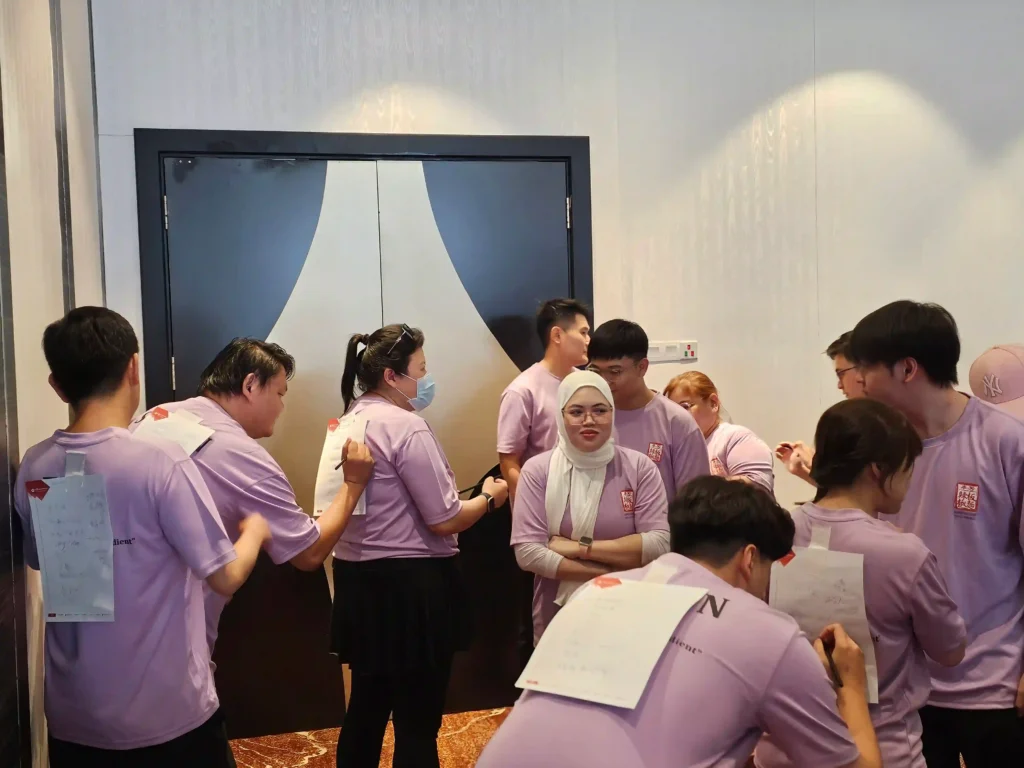
Each person has a piece of paper taped to their back. Teammates write down their first impressions or positive qualities. At the end, everyone removes the paper and reads the comments aloud.
Why it works:
In small groups, the feedback is personal and detailed. It creates both laughter and reflection, opening space for honest conversations that rarely happen at work.
Teams receive spaghetti sticks, tape, string, and one marshmallow. Their task: build the tallest freestanding structure that can hold the marshmallow on top.
Why it works:
In small groups, collaboration styles become clear. Some rush, others plan — but the teams that test and adapt quickly are the ones who succeed.
Learning focus: Communication, problem-solving, adaptability.
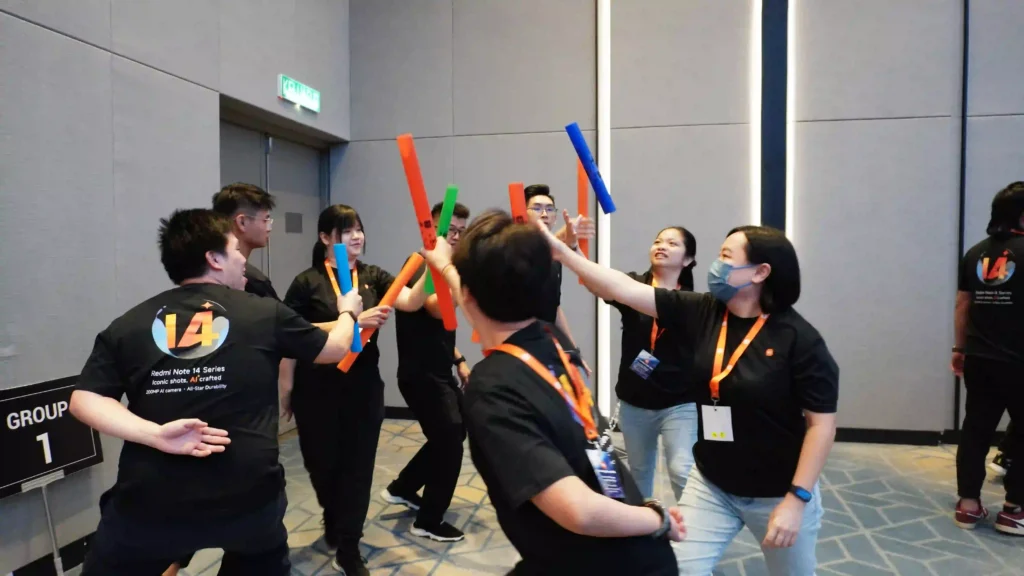
Standing in a circle, participants pass colourful sticks between each other in a set rhythm. As the pace increases, keeping in sync becomes the real challenge.
Why it works:
It’s highly energetic yet deceptively demanding. In larger indoor halls or semi-outdoor spaces, it sharpens focus and reinforces how success depends on awareness of both self and others.
Learning focus: Coordination, mindfulness, collective rhythm.
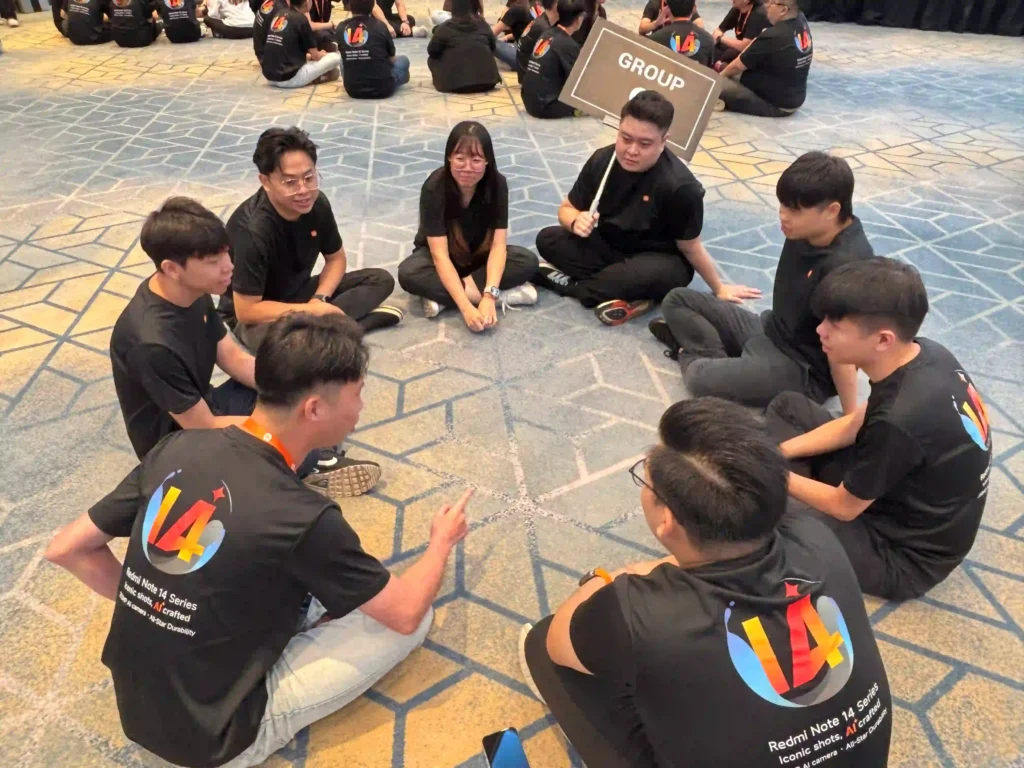
After a game or two, pause for a “mini townhall.”
Gather everyone in a circle and ask a few open questions:
This 30-minute dialogue is often the most powerful part of a short session.
It connects experience back to reality - and turns laughter into clarity.
Here’s a simple structure you can adapt for your own team:
Time
Focus
Example
Outcome
0:00–0:15
Warm-up
Colour Bloom
Break the ice, lift energy
0:15–1:15
Activity
Marshmallow Challenge
Experience collaboration in action
1:15–1:45
Mini Townhall
Guided reflection or leadership sharing
Link activity to company goals or culture
1:45–2:15
Reflection
Impression Game
Build appreciation and feedback culture
2:15–3:00
Wrap-up
Quick group sharing
Translate insights into next steps
Even with limited time, this mix of play + reflection + conversation can spark awareness and connection that lasts far beyond the session.
It’s not about how long you play — it’s about what you design for.
Duration
Best For
Limitation
Half Day (3–4 hrs)
Connection, morale reset
Limited reflection depth
One Day (6–8 hrs)
Habit and communication practice
Needs careful pacing
Two Days+
Cultural shift, leadership alignment
Cost and time heavy
If you’re just starting to rebuild morale or reconnect after a busy quarter, half a day is often enough — as long as it’s intentional.
A great team building session doesn’t need to be long. It just needs to be real. Give your people a chance to breathe, laugh, and see each other again — but also a moment to talk about what really matters. Because sometimes, half a day of honesty can do more for a team than a week of meetings ever could.