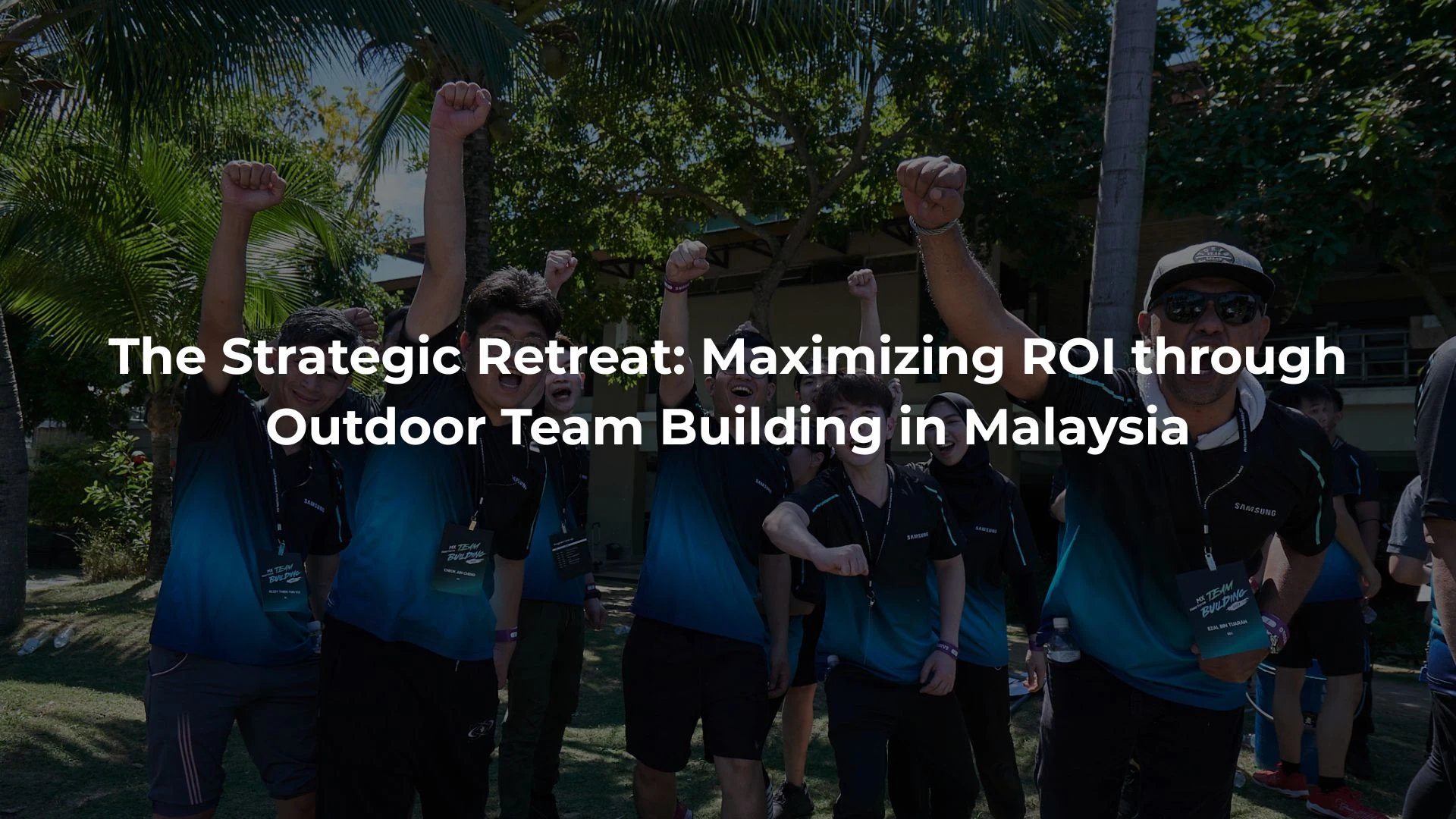
Ask almost any C-suite executive in Kuala Lumpur about outdoor team building, and you will likely get a mixed reaction. They will remember the heavy invoices from luxury resorts, pictures of their employees sweaty and exhausted after a low-level obstacle course, and perhaps a temporary bump in office morale that completely evaporated by Tuesday morning.
Too many corporate leaders view outdoor activities as expensive, non-productive distractions. And frankly, they are right to think so—when the program is designed by conventional vendors who mistake physical exhaustion for leadership development.
In the hyper-dynamic corporate landscape of 2026, you cannot afford to waste corporate budgets on simple weekend getaways. To drive real value, strategic company retreats must be treated as a high-stakes behavioral laboratory. When designed with clinical precision, outdoor team building in Malaysia becomes the ultimate crucible for testing your organization’s agility and building unshakeable team resilience.
The primary advantage of taking your team out of the office and into an outdoor setting isn't the fresh air, it is the presence of uncontrollable variables.
Inside the modern office, everything is engineered to be predictable. The temperature is regulated, the communication channels are structured, and workflows follow a set path. But the market isn't predictable. Economic disruptions, competitive threats, and shifting consumer demands require teams to pivot instantly under stress.
An outdoor environment acts as a high-fidelity simulator for these market realities. When a team is forced to navigate a complex physical strategy challenge under changing outdoor elements, they are forced to deal with real-time volatility. They must allocate resources on the fly, manage communication breakdowns, and modify their strategies when their initial plans fail. This isn't just an adventure; it is an active exercise in tactical adaptability.
In a typical office setting, corporate hierarchies and social scripts allow employees to hide. A manager can mask poor communication skills behind formal emails, and a disengaged team member can quietly melt into the background during a Zoom call.
The outdoors strips away these professional masks. Under simulated pressure, corporate titles quickly lose their meaning. The natural environment acts as an equalizer, forcing real behavioral fault lines to the surface.
You cannot fix a cultural silo until you can clearly see it. An outdoor environment doesn't create behavioral problems, it diagnoses them.
During an intense outdoor simulation, you will see exactly how your team functions when things go wrong. Do your managers default to aggressive command-and-control micro-management? Do junior staff members hold back critical insights due to a lack of psychological safety? Do departments default to protective gatekeeping rather than cross-functional collaboration?
By exposing these psychological safety gaps in a safe, simulated environment, facilitators can perform deep behavioral interventions before those exact same flaws jeopardize a major boardroom project.
The massive ROI disconnect in traditional team building happens the moment a game finishes. Conventional vendors end the challenge with a high-five and a group photo, completely wasting the learning opportunity.
Adrenaline alone does not build alignment. The true value of outdoor training happens during the structured, consultant-led debrief. The physical activity is merely the anchor; the debrief is where the strategic translation occurs.
Leaders must be guided to connect their outdoor performance directly back to office realities. If the team failed to complete an outdoor challenge because they rushed into execution without alignment, they must be asked: "Where are we rushing into execution without alignment in our current quarterly deliverables?"
Choosing the right setting for this behavioral observation is critical. While the outdoors is unmatched for testing agility against external variables, companies looking to solve highly precise, localized communication bottlenecks may find that a controlled room yields better data. Understanding the distinct differences outlined in our analysis of Why Indoor Team Building Games are Superior for Behavioral Training is essential for matching your venue with your specific corporate objectives.
Evaluate your upcoming corporate calendar. If your organization is planning an annual getaway simply to "give the staff a break," you are missing a massive opportunity to future-proof your execution.
Your immediate next step is to redefine the parameters of your corporate retreat from a leisure event into a targeted cultural intervention. Ensure that your next budget allocation is tied to measurable behavioral outcomes, clear strategic alignment, and expert debriefing protocols. Discover how a Vision-Driven Outdoor Intervention can transform your workforce into a highly agile, crisis-proof unit.