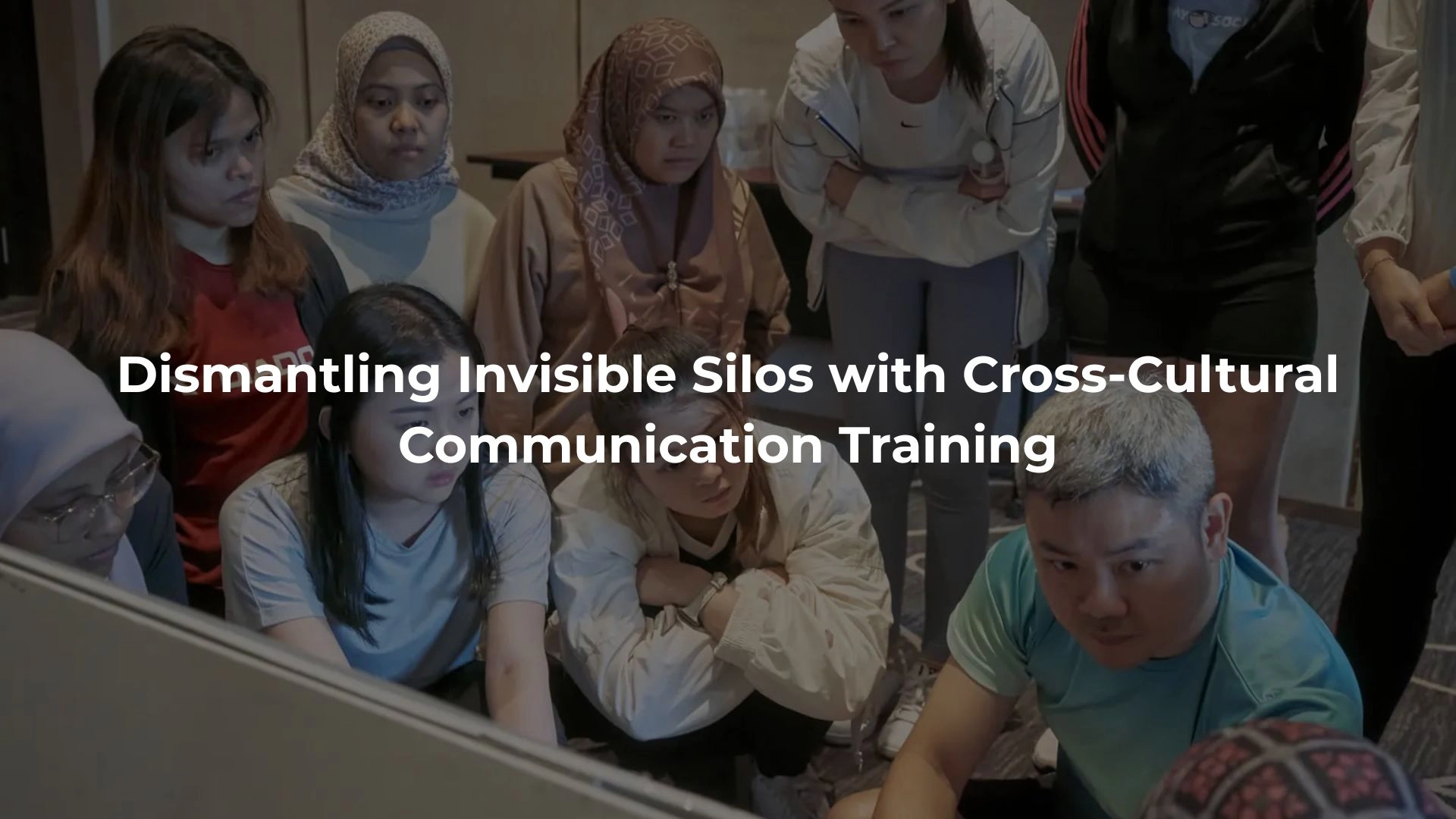
On the surface, the typical Malaysian office appears to be a model of modern corporate harmony. We celebrate every cultural festival together, share a diverse spread of food at company lunches, and pride ourselves on working within multi-ethnic, multi-generational teams. HR reports proudly highlight these metrics as definitive proof of a diverse and welcoming workplace.
But if you look closely beneath this polite exterior, you will often find an invisible web of deep, operational friction.
When pressure mounts and a major strategic deadline looms, teams frequently fracture into unconscious comfort zones. The Chinese-speaking executives huddled together in one corner, the Malay-speaking operational staff in another, while the English-fluent management team communicated on an entirely different wavelength. Simultaneously, senior managers clash with incoming Gen Z hires over shifting boundaries and communication norms.
This is the hidden reality of the Malaysian workplace. Surface-level harmony is often just a mask for deep organizational dysfunction. When individual groups operate in linguistic or generational isolation, strategic directives get lost in translation. To dismantle these invisible barriers and drive true diverse team alignment, organizations must move past tokenistic diversity celebrations and invest in structured cross-cultural communication training.
Most corporate diversity initiatives suffer from a fundamental flaw: they confuse diversity with inclusion.
Diversity is simply a numbers game. It is an administrative exercise in ensuring your headcount includes a specific percentage of different ethnic groups, genders, and age brackets. Inclusion, however, is a behavioral science. It is the practice of ensuring that these diverse perspectives can collaborate, challenge each other, and execute strategic objectives with maximum velocity.
Ticking ethnic boxes on a recruitment report does not mean your team is unified. Without a deliberate framework to facilitate deep interaction, putting diverse individuals in the same room simply creates a cluster of separate silos. When companies fail to differentiate between merely hosting an event and running a targeted cultural intervention, they run into the exact issues outlined in our analysis of Corporate Training vs Team Building: What Malaysian Companies Often Confuse. True organizational alignment requires active behavioral training, not just shared social activities.
In Malaysia, cross-cultural friction rarely manifests as overt hostility. Instead, it takes the form of quiet, passive withdrawal into "comfort bubbles." This friction typically occurs across two major fault lines:
Human beings are naturally drawn to the path of least resistance. In a high-stress workplace, employees will intuitively default to the language they feel most comfortable speaking. While this speeds up localized casual chatter, it severely damages cross-departmental execution. Information gets unintentionally gatekept, subtle nuances are lost during handovers, and non-fluent team members are left feeling excluded from the real decision-making loops.
The 2026 workforce spans an unprecedented mix of generations. We have Baby Boomers and Gen X leaders who grew up in environments prioritizing strict corporate hierarchies and deference to seniority. On the other side, we have Gen Z professionals who demand radical transparency, rapid feedback, and clear boundaries. When these two opposing behavioral systems collide without a translation framework, it leads to rapid disengagement, mutual resentment, and an unstable talent pipeline.
Left unchecked, these combined friction points erode your inclusive workplace culture, creating a divided company where separate teams pull in entirely different directions.
You cannot build a scalable enterprise by trying to force one group to adopt the personal cultural habits of another. Instead, leaders must co-create a completely neutral, high-performance professional ecosystem: A Third Culture.
A Third Culture does not ask employees to compromise their personal identities or backgrounds. Rather, it establishes a singular, supreme set of workplace behavioral agreements that override individual preferences.
This unified code of conduct defines precisely how the organization communicates, gives feedback, resolves structural conflict, and passes information across departments. The anchor for this entire framework is the company’s macro strategic "Lighthouse." When every employee regardless of their age, race, or department is aligned on a single corporate mission, personal biases disappear. The shared goal becomes the common language of the organization.
Examine your company’s internal dynamics during your next cross-functional meeting. If you notice your staff consistently grouping themselves by language preferences, or if your middle managers are struggling to connect with younger talent, your social infrastructure has developed critical cracks.
Your immediate next step is to look beyond surface-level workplace harmony and actively diagnose your hidden cultural bottlenecks. To unlock your team’s true collective potential, you must replace polite distance with structured communication protocols. Discover how a customized Cross-Cultural Alignment Framework can transform your diverse talent pool into a highly synchronized engine for growth.