What happens when a degree is no longer the primary ticket to a job? In 2025, Malaysian organizations are answering this by shifting from traditional degree-based recruitment to a focus on skills and competencies.
This strategic move makes investing in people's skills a top priority. Leaders must future-proof their workforce against rapid market changes.
Corporate training becomes the essential foundation for this shift. It builds a resilient, future-ready team capable of navigating a digital-first economy.
True organizational growth stems from structured learning that addresses root causes. It moves beyond surface-level activities to solve deeper performance gaps.
For decision-makers, this is not an optional activity. It is a fundamental requirement for sustaining innovation and operational excellence.
This guide explores how aligning internal talent with modern demands transforms the workplace. It provides actionable insights for strengthening teams and driving meaningful results.
Gartner's recent research pinpoints a single, overarching priority for the coming years: leadership and manager development. This focus is not a trend but a strategic necessity for sustainable growth.
True expansion is now inseparable from how an organization cultivates its people.
The rapid integration of AI is reshaping what is required of managers. They must now possess technical fluency alongside high emotional intelligence.
This dual demand makes traditional management styles insufficient. New capability-building strategies are essential to bridge these emerging gaps.
HR leaders must ask if their current training prepares teams for future complexity. Does it align individual contributions with broader strategic goals?
Decision-makers should evaluate whether their frameworks support managers during disruption. Strategic growth requires tools to foster a culture of accountability and continuous improvement.
By addressing these questions, organizations create cohesion. Every person understands their role in achieving collective success. Investing in structured corporate training is a pivotal step in this strategic journey.
Real progress in Malaysian workplaces is frequently stalled by a simple statistic: only 56% of staff have adequate growth opportunities. This isn't just a number. It's a symptom of deeper organizational misalignment where potential remains untapped.
Cultural resistance to new learning methods presents a significant hurdle. When teams are accustomed to traditional approaches, introducing innovative training can meet inertia. Leaders must actively model curiosity to shift this mindset from the top.
Many local businesses also grapple with fragmented skill gaps. These disjointed deficiencies prevent teams from executing complex projects with necessary speed and precision. The result is stalled innovation and sluggish market response.
Overcoming these obstacles requires moving beyond generic programs. Personalized learning journeys that resonate with the local workforce are essential. Addressing common barriers like limited time and lack of management support through structured, high-impact experiences is key for retaining talent and maintaining a competitive edge.
Data now provides undeniable proof: strategic training investments directly translate to superior organizational outcomes. The link between skilled teams and strong business performance is concrete, not theoretical.
Deloitte research highlights this connection. Organizations investing in continuous skill development are 49% more likely to improve their operational processes. This isn't just about learning; it's about tangible efficiency gains.
When development initiatives align with company goals, the results are significant. LinkedIn's 2024 Workplace Learning Report shows that high internal mobility, supported by robust training, leads to 53% longer staff tenures.
This retention boost directly impacts productivity and knowledge retention. Effective programs reduce errors and increase team confidence, creating a more efficient workforce.
Businesses transform their training from a cost into a strategic driver. They achieve this by linking learning initiatives to key performance indicators. This allows leaders to quantify the return on investment in their people.
Our analysis confirms that organizations prioritizing these initiatives outperform competitors. They excel in both productivity and talent retention. For a deeper look at this strategic alignment, explore our approach to structured corporate training.
Vision Building's core philosophy redefines training as a strategic intervention for deep workplace transformation. It starts from a key insight: common workplace problems are often symptoms of deeper systemic issues.
These can include leadership gaps or team misalignment. Effective learning initiatives must therefore address these root causes.
The approach is fundamentally human-centric. It empowers individuals to contribute directly to the organization's long-term vision. This moves development beyond superficial activities.
Every program is designed to foster a culture where acquiring new skills is visibly linked to personal and collective success. This strategic alignment ensures training is a continuous journey, not a single event.
AspectConventional Training ApproachVision Building's Philosophy-Aligned ApproachPrimary FocusImmediate skill application; symptom relief.Addressing root causes like misalignment and leadership gaps.Strategic GoalCheck a compliance box or meet a short-term need.Strengthen teams fundamentally for sustainable organizational growth.Program DurationOne-off workshops or isolated events.A continuous learning journey that evolves with business goals.Success MeasurementCompletion rates and participant satisfaction.Tangible improvements in team performance and talent retention.Cultural ImpactLimited; often seen as an HR activity.Embeds a value for learning directly linked to workforce and business outcomes.
Partnering with Vision Building transforms a company's approach to talent and performance improvement. It provides the expertise to build a resilient, future-ready workforce from within.
McKinsey's research reveals a powerful multiplier effect when a critical mass of the workforce actively engages in building new skills. Specifically, impact accelerates significantly once at least 25% of people are involved. This highlights a strategic tipping point for sustainable growth.
The goal is to move beyond sporadic programs. True advancement requires embedding continuous learning into the daily rhythm of the business. This isn't about mandatory seminars. It's about creating a culture where skill acquisition is a natural part of the work process.
Effective strategies are twofold. First, leaders must visibly model these behaviors from the top. This signals that development is a core priority, not an optional activity. Second, encourage teams to experiment and share ideas from the ground up.
Celebrating small wins reinforces this mindset. Engaging a critical mass ensures new skills are applied consistently across roles. This builds a self-sustaining ecosystem where knowledge is shared peer-to-peer.
The outcome is a more resilient organization. It can adapt to market shifts while maintaining high performance. A structured roadmap helps HR leaders scale these initiatives effectively. This ensures every employee contributes to long-term, sustainable growth.
Building a robust leadership pipeline is no longer a luxury but a strategic imperative for Malaysian organizations. Gartner ranks this as the top priority for 2025 and 2026. This underscores the need for structured, high-impact interventions.
Generic workshops often fail to address specific managerial challenges. Tailored learning programs bridge the gap between current capabilities and future strategic needs. They prepare leaders for complex business environments.
Effective leadership development pairs high-potential individuals with senior mentors. This facilitates the transfer of critical knowledge and experience. Clear milestones and feedback mechanisms track progress.
Such programs ensure readiness for promotion and maintain cultural continuity. They reduce costs associated with external executive hiring. Leaders gain the confidence and skills to drive change.
Customized initiatives align with an organization's unique goals and values. They foster a pipeline of ready talent. This approach moves beyond one-size-fits-all training.
Programs are designed to address specific performance gaps. They integrate practical scenarios and real-world applications. This ensures learning translates directly into workplace success.
AspectGeneric Leadership ProgramTailored Learning ProgramFocusBroad, theoretical concepts.Specific challenges and strategic goals.Delivery MethodStandardized workshops.Blended learning with mentorship and coaching.Success MetricsCompletion rates and satisfaction scores.Promotion readiness and team performance improvement.Cultural FitLimited alignment with local workplace dynamics.Designed to reinforce organizational culture, like in theme-based team building.
Investing in these tailored programs builds a resilient leadership bench. It directly supports sustainable growth and innovation. The result is a culture where continuous learning is the norm.
With 92 percent of organizations planning to boost AI investments over the next three years, the tools for building skills are evolving rapidly. This marks a new era where digital fluency is a core requirement for sustainable business growth.
AI-driven platforms now personalize learning paths at an unprecedented scale. They can assess individual skill gaps and recommend targeted content. This ensures every person receives the precise support they need.
Tools like Learning Experience Platforms (LXPs) enable teams to access resources anytime, anywhere. This breaks down location barriers, especially for distributed workforces. Data-driven personalization makes training relevant to an individual's current role and future career aspirations.
AspectTraditional LearningAI-Enhanced LearningPersonalizationOne-size-fits-all curriculum.Dynamic paths based on individual performance and goals.Access & DeliveryScheduled, location-bound sessions.On-demand platforms (LXPs) for continuous access.Insight GenerationPeriodic tests and manual feedback.Real-time data analytics on progress and engagement.Managerial SupportLimited visibility into team progress.Actionable insights for targeted coaching and support.Strategic ImpactFocus on completion.Focus on businessoutcomes and skill application.
By leveraging these systems, HR leaders can track progress in real-time. They can adjust their strategies based on actionable information. This creates a self-sustaining learning culture where skills and organizational success evolve together.
Practical evidence, drawn from diverse industries, demonstrates how aligned training transforms operational metrics. These real-world scenarios move beyond theory to show what works.
A global retail brand upskilled 3,000 employees using a targeted platform. This led to over 20% growth in annual store sales.
The initiative directly linked new skills to key business goals. Similarly, a leading financial firm mapped 200+ roles across 11,000 people.
This role-based approach ensured training met specific performance needs. Both cases prove that focused learning drives clear outcomes.
High-impact development is a continuous journey, not a single event. It weaves formal sessions with peer sharing and mentoring.
The table below contrasts isolated activities with strategic pathways.
AspectTraditional Training EventsStrategic Learning JourneysFocusCompleting a syllabus or topic.Achieving specific business and performance goals.StructureOne-off workshops or seminars.Blended programs with practice, feedback, and application.MeasurementAttendance and satisfaction scores.Data on skill application, impact on KPIs, and talent mobility.Cultural IntegrationLimited; seen as an HR activity.Embeds learning into daily work, building a culture of shared knowledge.
These examples provide a blueprint for local organizations. The key is tying learning to clear strategies and success metrics.
This approach builds a more adaptable workforce and strengthens teams from within.
The path to a skilled workforce is often obstructed by unseen barriers within the organization itself. These hurdles, from cultural inertia to waning motivation, can derail even the best-designed training initiatives.
Cultural resistance emerges when new learning methods clash with established habits. Leaders must visibly model curiosity to signal that skill-building is a core priority. This shifts mindset from the top.
Motivation fades when training feels separate from daily work. The solution is to weave learning directly into existing workflows. Toyota's Kaizen philosophy exemplifies this, embedding continuous improvement into every process.
AspectReactive ApproachProactive ApproachFocusFixing immediate symptoms or compliance gaps.Building a sustainable culture of learning and growth.Leadership RoleSponsoring programs without active participation.Coaching teams and celebrating applied skills.MeasurementCompletion rates and satisfaction scores.Engagement levels and performanceoutcomes.
Creating a safe space where people can propose ideas is vital. Regular manager check-ins and recognizing small wins sustain momentum. This builds long-term capability and success.
Effective measurement transforms training from an operational expense into a documented driver of business success. Securing ongoing support from leadership requires clear proof of value.
This disciplined approach ensures every program remains accountable to strategic priorities.
Mature organizations move beyond simple completion rates. They track actual performance improvements and tangible business outcomes like productivity.
Planning these metrics from the outset ties learning objectives directly to company goals.
These systems allow companies to refine training content based on real workforce needs. They assess immediate participant feedback alongside long-term skill growth.
This provides a comprehensive view of program effectiveness.
Quantifying results demonstrates how initiatives contribute to higher quality and better retention. A framework for measuring ROI keeps development efforts aligned with business priorities for sustained growth.
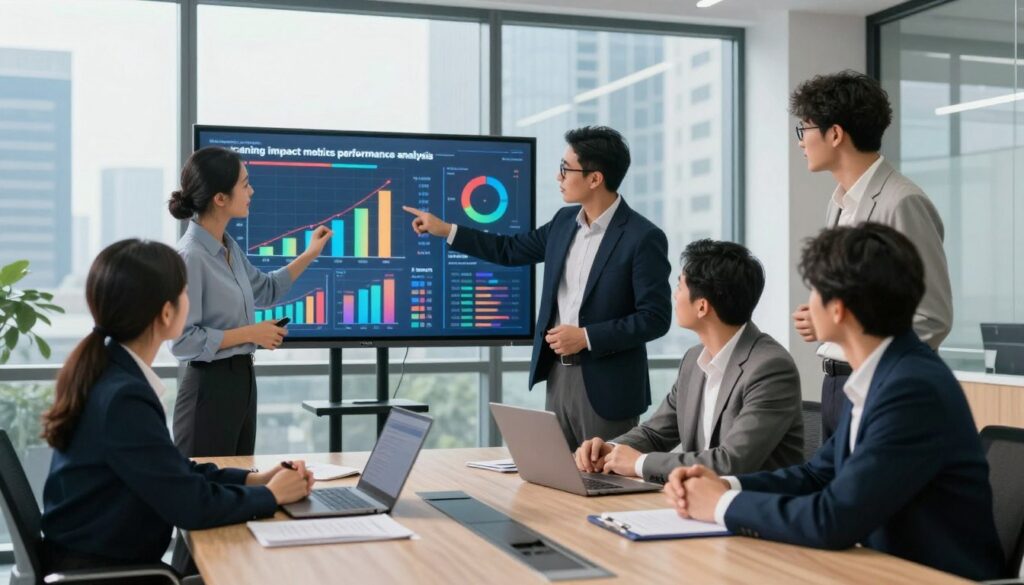
As businesses look ahead, the true measure of success lies in how effectively they cultivate internal talent and align it with strategic vision. Corporate training has evolved from simple systems into integrated ecosystems that drive genuine business advantage.
Connecting individual growth with organizational goals builds a resilient workforce prepared for future challenges. This alignment turns continuous learning into a journey that sustains high performance and innovation.
Vision Building remains committed to transforming workplace culture through structured, high-impact interventions. We encourage decision-makers to explore platforms that unite skills, data, and experiences into one seamless growth process. Investing in your people is the most effective strategy for ensuring long-term success in Malaysia's dynamic market.
How does corporate training directly contribute to an organization's growth?
Effective training moves beyond simple skill transfer to fundamentally strengthen a business. It aligns a workforce with strategic goals, closes critical performance gaps, and fosters a culture of continuous improvement. This builds a more agile and resilient organization, directly enhancing productivity, innovation, and the ability to adapt to market changes for sustainable growth.
What are the signs that our current learning programs need a strategic overhaul?
Key indicators include low participation rates, feedback that sessions are not relevant to daily roles, and a lack of measurable improvement in team performance. If training feels like a compliance checkbox rather than a valued resource, or if leaders cannot connect it to business outcomes, it signals a need for realignment with core organizational needs and deeper workplace challenges.
Can leadership development be effectively customized for different management levels?
Absolutely. Tailored programs are essential for impact. For new managers, focus often centers on core communication, feedback, and delegation skills. For senior leaders, development shifts to strategic thinking, influencing organizational culture, and driving transformation. Customization ensures learning addresses the specific challenges and responsibilities at each career stage, maximizing its relevance and effect.
How do we measure the real return on investment (ROI) of our training initiatives?
Measuring ROI involves linking learning to key performance indicators beyond completion rates. Look at metrics like improved quality of work, increased project success rates, reduced time-to-competency for new hires, and higher team engagement scores. Data-driven feedback from participants and their managers on applied skills provides crucial qualitative evidence of a program’s tangible business impact.
What role do digital tools and AI play in modern capability building?
Digital tools and AI enable personalized, scalable, and engaging learning journeys. Platforms can curate content based on individual skill gaps, while AI-driven simulations provide safe practice environments for complex scenarios. These technologies support continuous learning, provide rich data on progress, and help integrate skill development seamlessly into the daily workflow, making growth a consistent part of the job.
How can organizations overcome cultural resistance to new training programs?
Success starts by involving people early and communicating the “why” behind the initiative. Secure visible support from top leadership and engage managers as champions. Design programs that solve immediate workplace problems, demonstrating quick wins. Fostering a culture that celebrates learning and application, rather than punishment for mistakes, is key to shifting perception and building genuine engagement.
Effective training moves beyond simple skill transfer to fundamentally strengthen a business. It aligns a workforce with strategic goals, closes critical performance gaps, and fosters a culture of continuous improvement. This builds a more agile and resilient organization, directly enhancing productivity, innovation, and the ability to adapt to market changes for sustainable growth.
Key indicators include low participation rates, feedback that sessions are not relevant to daily roles, and a lack of measurable improvement in team performance. If training feels like a compliance checkbox rather than a valued resource, or if leaders cannot connect it to business outcomes, it signals a need for realignment with core organizational needs and deeper workplace challenges.
Absolutely. Tailored programs are essential for impact. For new managers, focus often centers on core communication, feedback, and delegation skills. For senior leaders, development shifts to strategic thinking, influencing organizational culture, and driving transformation. Customization ensures learning addresses the specific challenges and responsibilities at each career stage, maximizing its relevance and effect.
Measuring ROI involves linking learning to key performance indicators beyond completion rates. Look at metrics like improved quality of work, increased project success rates, reduced time-to-competency for new hires, and higher team engagement scores. Data-driven feedback from participants and their managers on applied skills provides crucial qualitative evidence of a program's tangible business impact.
Digital tools and AI enable personalized, scalable, and engaging learning journeys. Platforms can curate content based on individual skill gaps, while AI-driven simulations provide safe practice environments for complex scenarios. These technologies support continuous learning, provide rich data on progress, and help integrate skill development seamlessly into the daily workflow, making growth a consistent part of the job.
Success starts by involving people early and communicating the "why" behind the initiative. Secure visible support from top leadership and engage managers as champions. Design programs that solve immediate workplace problems, demonstrating quick wins. Fostering a culture that celebrates learning and application, rather than punishment for mistakes, is key to shifting perception and building genuine engagement.