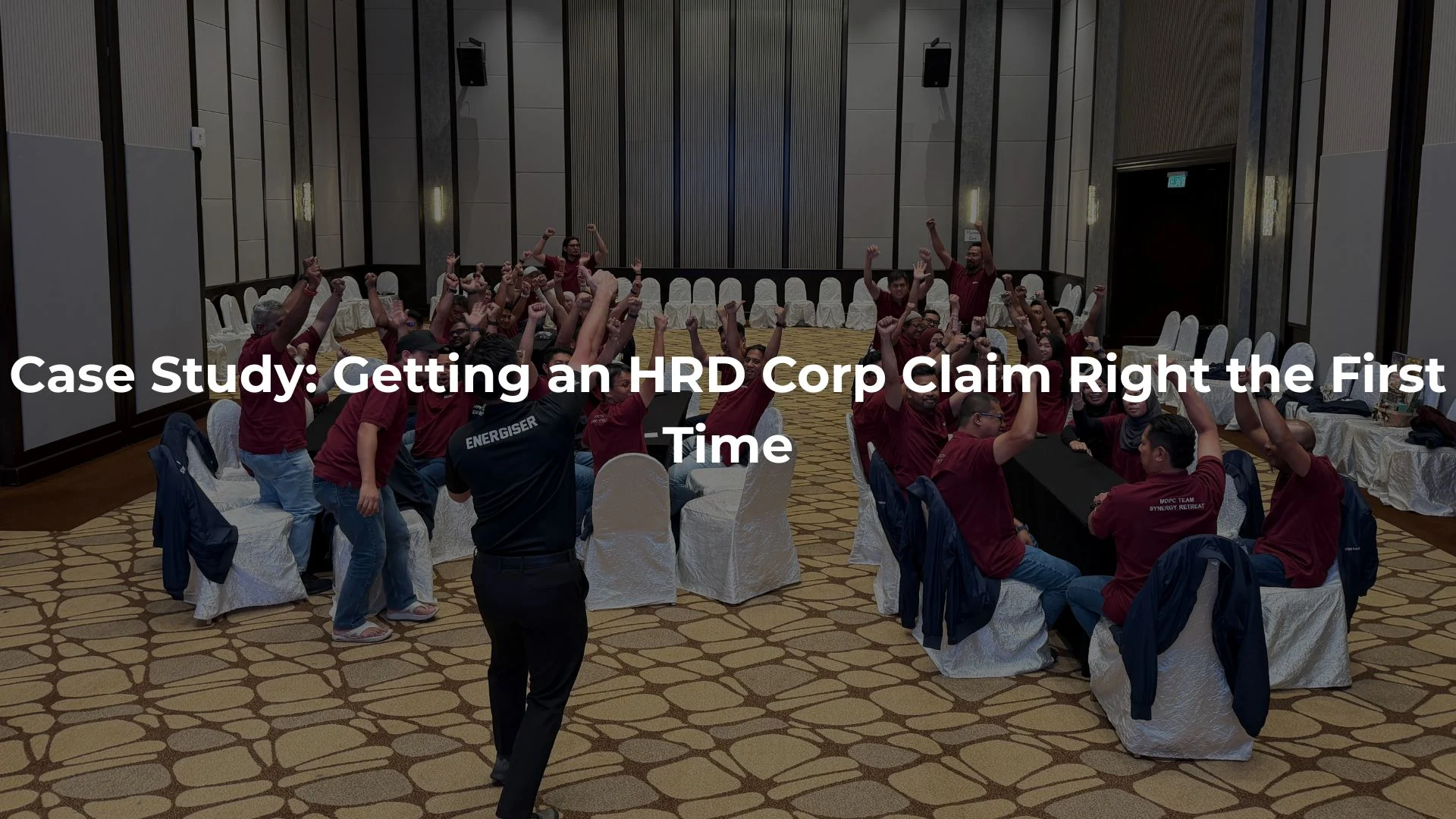
A 200-employee manufacturing firm had an HRD Corp claim rejected the previous year — not because the training programme itself was ineligible, but because of incomplete documentation. The company had already paid for the training and lost the reimbursement they were counting on, a costly and avoidable outcome. The following year, working with Vision Building on a similar type of programme, the claim was approved on the first submission.
The gap between those two outcomes wasn't the programme content or the provider's HRD Corp registration status — both were fine the first time too. The gap was process: how documentation was handled, when it was prepared, and how the e-TRiS submission timeline was managed.
This is a more common story than most companies realize. A rejected HRD Corp claim rarely means the training itself didn't qualify — far more often, it means a step in the documentation or submission timeline was missed, and the company simply absorbs the cost rather than investigating what went wrong or trying again with a clearer process.
The company's HR team had assumed the rejection meant something was wrong with the training programme itself — perhaps it didn't qualify, or the provider wasn't properly registered. In fact, the programme was eligible; the documentation submitted alongside the claim was incomplete, missing elements of the required paper trail (offer letter, invoice, attendance list, and training report) that HRD Corp needs to process a claim. The rejection left the HR team understandably hesitant to plan further claimable training, worried the same thing would happen again.
The financial impact went beyond the immediate reimbursement loss — the HR lead also had to explain the rejected claim internally to finance, which made the case for future claimable training harder to make the following budget cycle, even though the training itself had been genuinely valuable for the teams involved.
Working with Vision Building, the company confirmed SBL-Khas eligibility and the specific claim scheme before the programme was even booked, rather than assuming eligibility and discovering gaps afterward. Documentation was prepared in parallel with programme planning — not gathered retroactively after the training had already taken place — which meant nothing was missing when it came time to submit.
The e-TRiS submission was completed with sufficient lead time before the training date, since submissions made too close to or after the training date risk rejection regardless of how complete the documentation is. Throughout the process, the HR team was given a clear checklist of exactly what would be required post-training, removing the guesswork that had contributed to the previous year's gap. For the full breakdown of what's required and how the schemes work, see the HRD Corp vs HRDF FAQ.
A short internal review after the previous year's rejection had identified the specific gap: the attendance record submitted hadn't captured full-day attendance for every participant, since a handful of staff had left slightly early. This time, attendance tracking was built into the programme's own schedule from the start, rather than treated as a separate administrative task bolted on afterward.
The claim was approved on first submission, with no follow-up queries from HRD Corp — a meaningful contrast to the previous year's rejection and resubmission cycle. The employer's effective cost matched the pre-agreed estimate exactly, which let the HR team budget with confidence rather than treating the claim outcome as uncertain. That confidence translated directly into action: the company has since run two further HRD Corp claimable programmes with Vision Building, treating claimable training as a reliable part of its annual budget rather than a gamble.
The HR lead specifically noted that having a documentation checklist handed over at the start of the engagement, rather than requested after the fact, removed the anxiety that had built up around HRD Corp claims since the previous year's rejection — the process felt predictable rather than something to worry about after the training had already happened.
The reusable lesson is procedural, not programme-specific: confirm the claim scheme before booking, not after; prepare documentation in parallel with planning rather than as an afterthought once training has already happened; and submit on e-TRiS with enough lead time that a late submission doesn't void an otherwise fully eligible claim. Most importantly, a rejected claim usually signals a paperwork gap, not an ineligible programme — worth knowing before writing off HRD Corp claims as unreliable. For the full process breakdown, see the HRD Corp Claimable Team Building guide.
Companies that have had a claim rejected in the past shouldn't assume the next attempt will go the same way. As this case shows, the fix is often a narrow, specific process gap rather than a fundamental problem with the company's eligibility — worth investigating before writing off claimable training altogether.
A mid-sized manufacturing firm with around 200 employees — a common profile among companies that have previously had an HRD Corp claim rejected due to documentation issues rather than programme ineligibility.
The documentation submitted alongside the claim was incomplete — missing elements of the required paper trail HRD Corp needs, such as full attendance records or a complete training report — not because the training programme itself was ineligible.
The claim scheme was confirmed before booking, documentation was prepared in parallel with programme planning rather than afterward, and the e-TRiS submission was completed with sufficient lead time before the training date.
Yes. Vision Building provides clients with a clear checklist of required documentation and manages the claim-relevant paperwork alongside programme planning, rather than leaving it to the client to assemble after training has taken place.
Don't let a paperwork gap cost you a training budget you're already entitled to. See more stories or get started with claim support built in from the start. For the full naming and scheme breakdown, see the HRD Corp vs HRDF FAQ, and for the real cost math behind these claims, see how much team building really costs.